
Why Wild Turkeys Are Thriving in America’s Suburbs
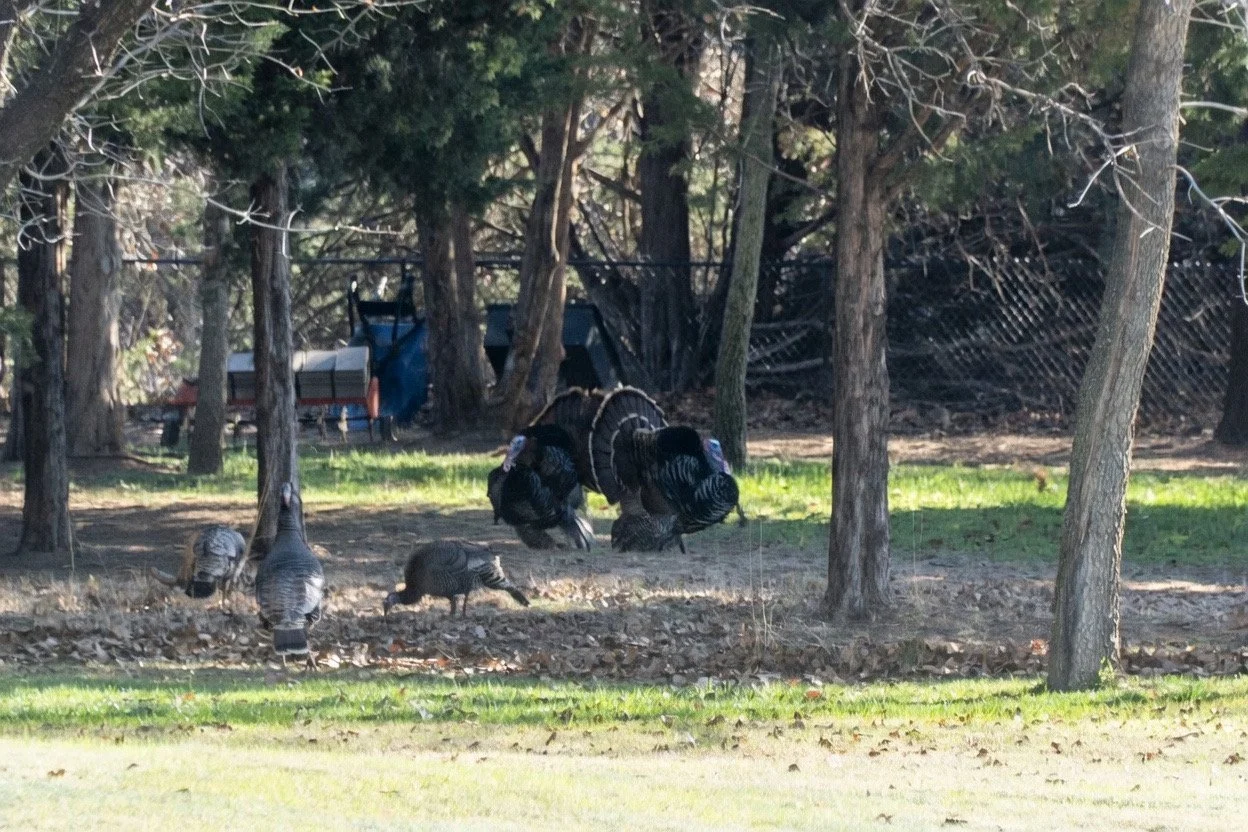
I live in Edmond, Oklahoma, a northern suburb of Oklahoma City. I live on a street that has 14 houses with the properties ranging from 2 acres to 6 acres. And in the nearly 10yrs I have lived here I have always had an abundance of rio grande turkeys. When the numbers of wild turkey across the state of Oklahoma and the country began to drastically decline I could honestly say that I had more turkeys on my yard than I did on two sections of land my family owns in western Oklahoma. One roost on my families place for 30yrs of my life had 100-150 turkeys roost in those cottonwoods every night. And in the last 12yrs their hasn’t been a single turkey roost there since. Across North America, wildlife biologists and hunters have noticed a puzzling trend over
the past decade. In many rural landscapes where wild turkeys historically thrived, populations have declined. Yet in suburban neighborhoods—from New England to the California—flocks of wild turkeys appear to be thriving. Seeing a group of turkeys strutting through a subdivision or feeding in a backyard has become increasingly common. While these encounters sometimes surprise homeowners, they may actually represent something important: suburban environments could be playing a role in stabilizing wild turkey populations during a period when some rural populations are facing challenges.
A Conservation Success Story Facing New Questions
Wild turkeys represent one of North America’s greatest wildlife conservation success stories. By the early 1900s, habitat loss and unregulated hunting had reduced wild turkey numbers to an estimated 200,000 birds nationwide, and some states had lost their populations entirely. Through restoration programs, regulated hunting, and habitat improvements, wild turkeys rebounded dramatically. Today, rough estimates say we have seven million wild turkeys across the United States, occupying nearly their entire historic range. Despite this success, recent research has shown that some regional turkey populations are declining, particularly in parts of the Midwest and Southeast. For example, research efforts in Kansas have documented population declines of nearly 60 percent since 2008, prompting large-scale studies to understand changes in turkey survival, reproduction, and habitat use. Researchers studying these trends have identified several potential causes, including habitat changes, predator dynamics, weather patterns, and reduced brood survival. Studies in states like Oklahoma are examining how factors such as land-use change, climate conditions, and genetics may influence turkey population dynamics. While scientists continue to investigate these declines, another pattern has become increasingly clear: wild turkeys are thriving in many suburban environments.
Why Suburbs Provide Ideal Turkey Habitat
At first glance, suburban neighborhoods might seem like an unlikely refuge for wildlife. But many suburbs unintentionally create exactly the type of habitat wild turkeys prefer. Wild turkeys are considered habitat generalists, meaning they can adapt to a variety of environments. Their survival depends on landscapes that provide a mixture of open feeding areas and forested cover for roosting and nesting. Suburban developments often contain the same mosaic of habitat types turkeys rely on in the wild, including:
• Small woodlots or tree corridors
• Parks and greenbelts
• Open lawns and grassy areas
• Mature trees suitable for roosting
Research on wild turkey habitat use has consistently shown that turkeys benefit from “edge habitats,” where forests meet open areas. These areas provide abundant food sources such as insects, seeds, and acorns while still offering protective cover from predators. In many suburban landscapes, this patchwork of habitats is actually more consistent than what turkeys find in heavily farmed or intensively managed rural areas.
Reduced Hunting Pressure and Altered Predation
Another factor contributing to suburban turkey success may be reduced mortality. In rural environments, turkeys face multiple pressures including predation, habitat disturbance, and hunting. In suburban neighborhoods, however, hunting is often restricted or prohibited. This can allow adult birds to survive longer and reproduce more successfully. Predator communities may also function differently in developed areas. Although predators such as coyotes, raccoons, and foxes still occur in suburban environments, the structure of these ecosystems can differ from rural landscapes, influencing how predators interact with prey species. Urban wildlife research across many species has shown that animals living near people often experience higher survival rates due to reduced direct human harvest and predictable food sources.
The Turkey’s Ability to Adapt
One reason wild turkeys have expanded into suburban environments is their remarkable adaptability. Biologists once believed turkeys required extremely large tracts of uninterrupted forest to survive. However, research has since shown that turkeys can persist in relatively small habitat patches if they contain the essential elements of food, cover, and roosting sites. Their diverse diet—which includes insects, seeds, berries, and agricultural grains—allows them to exploit a wide variety of food sources. This dietary flexibility is one reason turkeys are able to adjust to changing landscapes and even human-dominated environments. This type of wildlife adaptation to human environments is known as “synurbization,” a process where animals develop behavioral and ecological changes that allow them to thrive in urban and suburban ecosystems.
Conservation Research and the Role of Turkeys For Tomorrow
As wildlife scientists work to understand why turkey populations are declining in some regions while thriving in others, conservation organizations are helping fund critical research. One organization contributing to these efforts is Turkeys For Tomorrow, a conservation group focused on restoring and protecting wild turkey populations through habitat work, research funding, and education. By supporting studies on turkey reproduction, habitat management, and population dynamics, organizations like Turkeys For Tomorrow help provide wildlife agencies with the scientific data needed to make informed conservation decisions. Research from universities and state wildlife agencies continues to examine factors such as nesting success, brood survival, predator impacts, and habitat quality—issues that may ultimately determine the future health of wild turkey populations.
What Suburban Turkeys May Mean for the Future
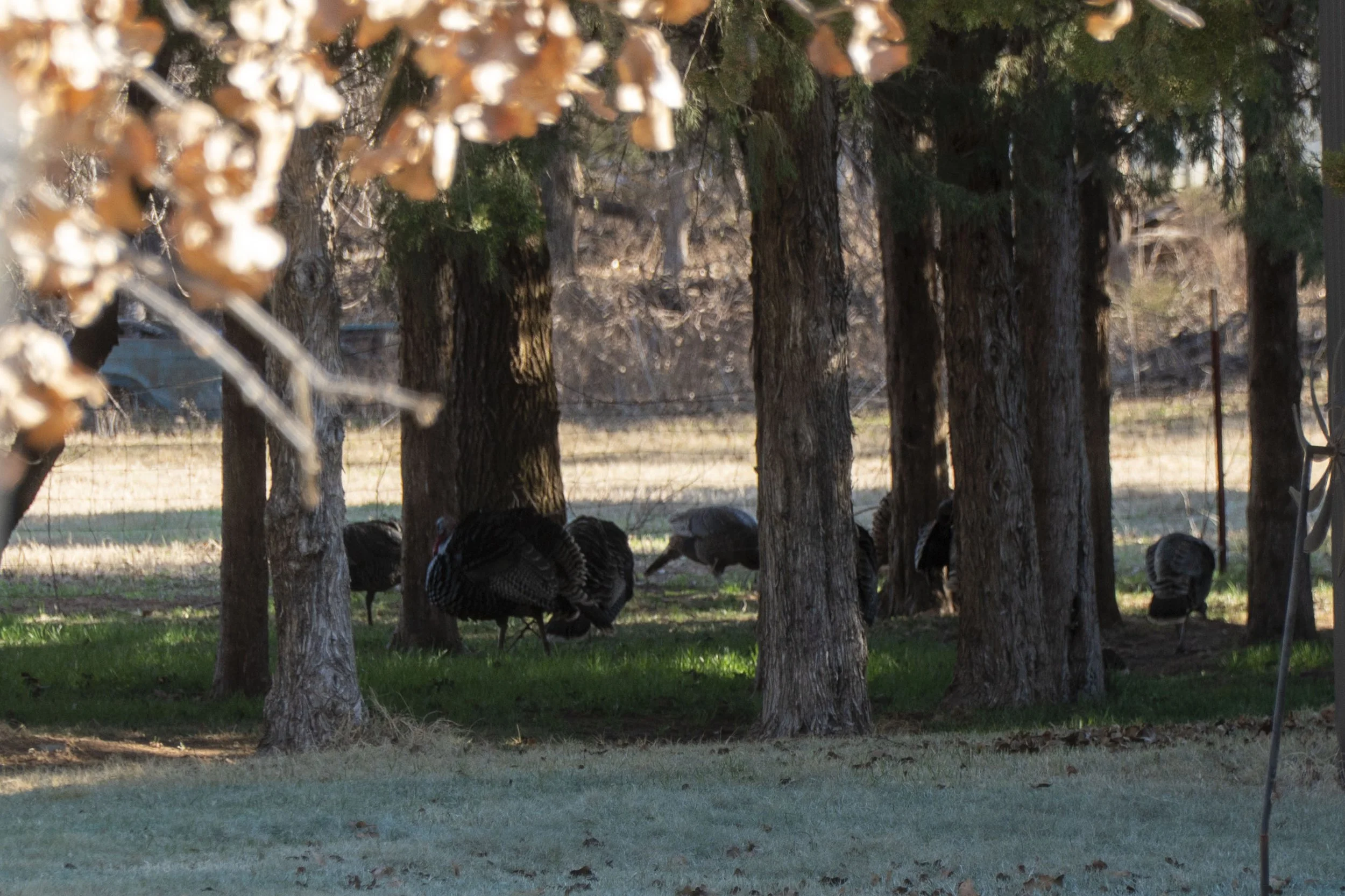
The growing presence of wild turkeys in suburban neighborhoods highlights one of the species’ most important traits: adaptability. As landscapes across North America continue to change due to development, agriculture, and shifting land management practices, species capable of adapting to new environments will have the best chance of long-term survival. Suburban turkey populations may serve as important refuges for the species, helping maintain stable numbers while researchers and conservationists work to better understand the factors affecting populations in more traditional habitats.In many ways, the sight of a flock of wild turkeys crossing a quiet neighborhood street is more than just an unusual wildlife encounter. It may be a glimpse into how wildlife adapts—and sometimes thrives—in a rapidly changing world.