
Is The .410 the 6.5 Creedmoor of the Turkey Hunting World?
First off let me say I own both a 6.5 Creedmoor and a .410 turkey shotgun. I have a CVA Cascade in a 6.5 Creedmoor and a JTS .410 Single Shot Shotgun. So I’m not saying I’m not “that guy” on occasion. However, the 6.5 Creedmoor became what I like to call the “Hipster” caliber of hunting. Yes they are known for being accurate, low recoil options and all of a sudden we have them out west trying to drop elk and other big game. Will they? Sure with a great shot they will. My Eskimo guide in Alaska hunted moose with a 22-250. A perfect shot will take down about anything but the Creedmoor quickly became the butt of jokes for its lack of knock down power as some found out. The “Hipster” round if you will.
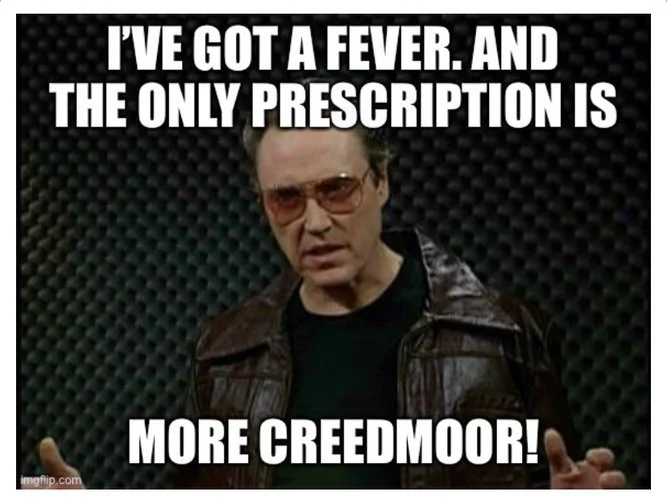


So Is the .410 which has exploded with popularity the last few years on the same path? Is it the “Hipster” round of the turkey world? Let’s dive in. The .410 single shot shotgun has undergone one of the most surprising transformations in modern hunting culture. Once dismissed as a beginner’s gun or a novelty for small game, it has rapidly climbed the ranks to become a serious—and in many circles, preferred—tool for turkey hunters. In much the same way the 6.5 Creedmoor stormed the rifle world, the .410 is redefining expectations in the shotgun space.
For decades, turkey hunting was dominated by 12-gauge shotguns. The logic was simple: more pellets meant a greater chance of a clean kill. Heavy payloads, long barrels, and punishing recoil were accepted as part of the deal. Hunters believed that power and pattern density could only come from larger gauges. The .410, with its small bore and limited payload, was largely written off as underpowered for turkeys.
That perception has changed dramatically—and quickly.
The turning point has been advancements in ammunition, particularly the introduction of Tungsten Super Shot (TSS). Unlike traditional lead, TSS is significantly denser, allowing manufacturers to pack more energy into smaller pellets. This means that even tiny shot sizes—like #9 or #10—can deliver lethal penetration at distances that were previously unthinkable for a .410. Suddenly, the limitations that once defined the .410 were no longer barriers.
With TSS loads, the .410 can produce incredibly tight, dense patterns capable of cleanly harvesting turkeys at ethical ranges. In fact, many hunters are finding that their .410 setups rival—or even outperform—older 12-gauge configurations using traditional ammunition. The result is a complete shift in how the platform is viewed.
But performance is only part of the story. The .410’s rise is also about experience.
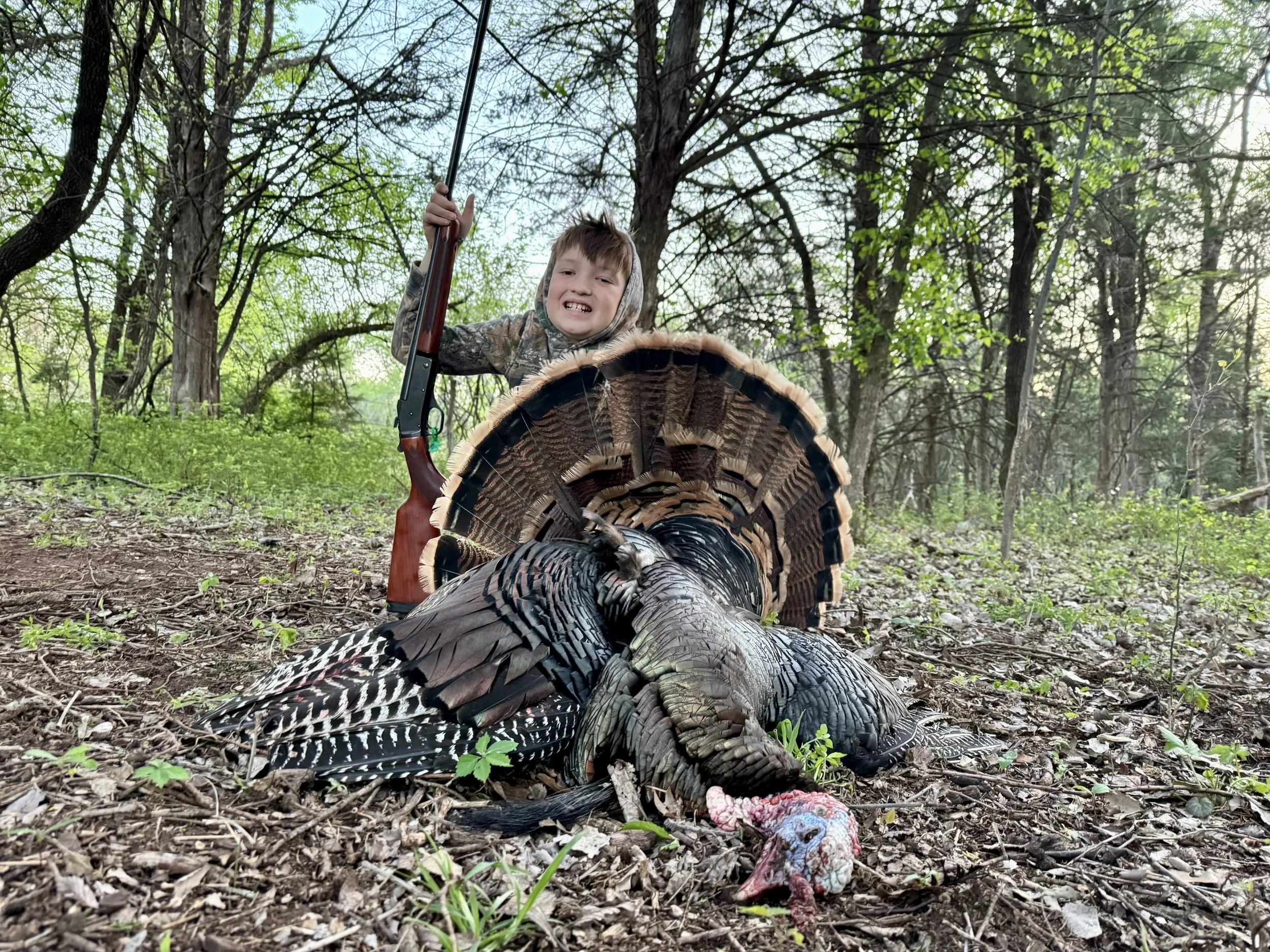
My son Josiah and his first ever turkey taken with his JTS .410 Shotgun.
Turkey hunting has always been as much about the challenge as the harvest. As gear has improved, some hunters have begun seeking ways to make the pursuit more engaging again. Enter the .410. Its lighter payload and tighter margin for error demand greater precision, better calling, and smarter positioning. It forces hunters to get closer, pay more attention, and execute more carefully. In that sense, it restores a level of skill that modern equipment had started to minimize.
Recoil is another major factor driving its popularity. The .410 produces minimal kick, making it ideal for youth hunters, smaller-framed individuals, or anyone looking to reduce fatigue during long hunts. This accessibility has helped bring new hunters into the sport while also appealing to seasoned veterans who simply want a more enjoyable shooting experience. Not everyone is cut out for a 3.5” turkey load!
Additionally, the lightweight nature of most .410 single shot shotguns makes them perfect for mobile hunting. Covering ground, setting up quickly, and staying comfortable throughout the day are all easier when you’re not carrying a heavy firearm. In a style of hunting that often involves long sits and careful movement, every ounce matters. In the end, the rise of the .410 single shot shotgun reflects a broader shift in hunting philosophy. It’s no longer just about using the biggest tool for the job—it’s about using the right tool. Efficiency, precision, and experience are taking priority over sheer power.
So is the .410 the 6.5 Creedmoor of the turkey hunting world? Maybe, but that doesn’t mean it isn’t affective, especially with modern ammunition which if we are being honest is the reason the .410 has been able to make such a comeback. With out munition advancements its probably not back in the spotlight as it is today. Again, they both have their place. I will continue to primarily shoot my 6.5………PRC and when people ask “Brad, why do you shoot those 3.5” 12 gauge turkey loads?” I will respond, “Cause they don’t make a 4”. What are your thoughts? Is the .410 the “Hipster” round of the turkey world?
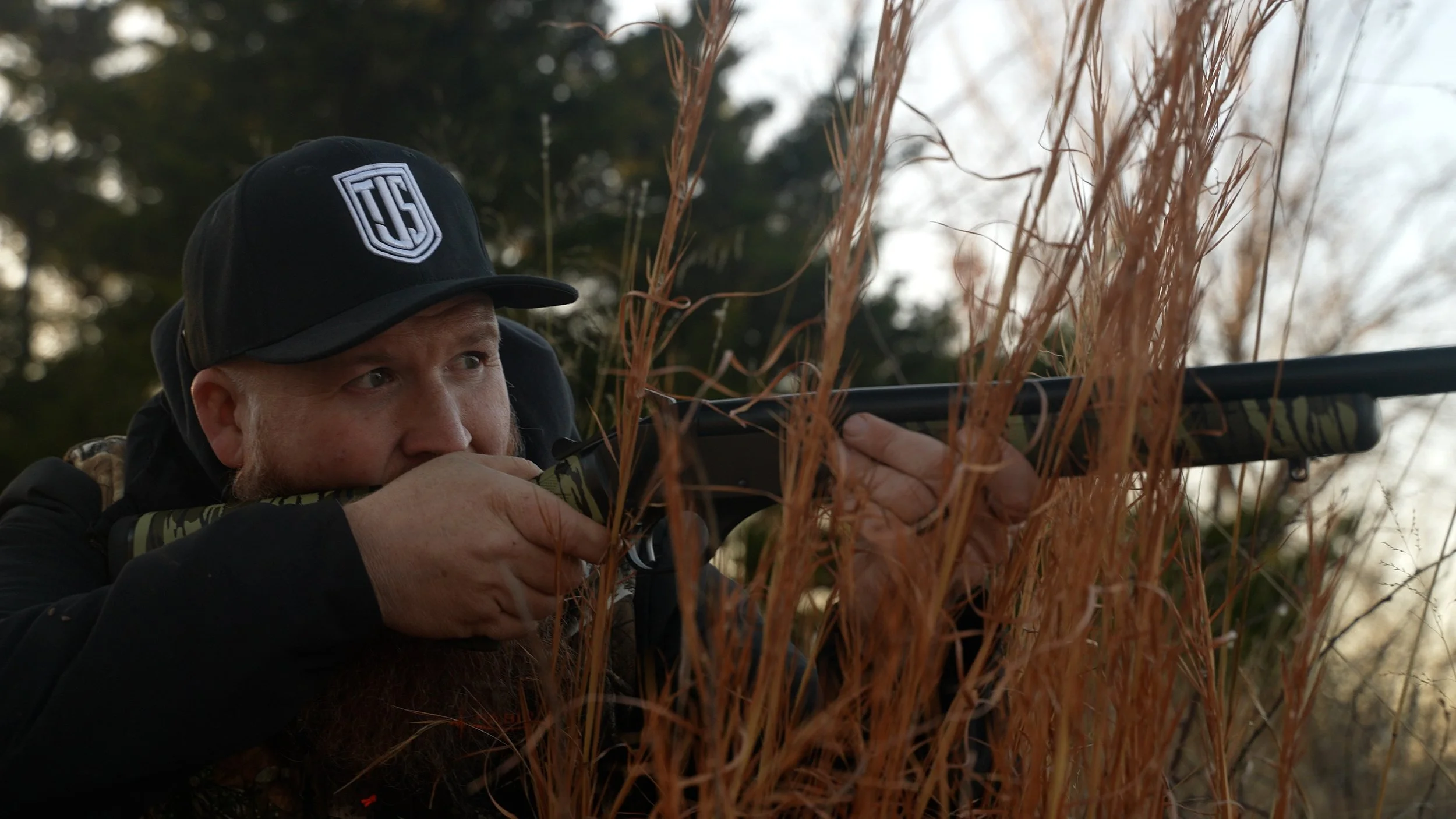
Also…Sorry for using a picture of you Adam on this. Probably going to catch a few strays on that. My bad.


• 100% cotton
• Sport Grey is 90% cotton, 10% polyester
• Ash Grey is 99% cotton, 1% polyester
• Heather colors are 50% cotton, 50% polyester
• Fabric weight: 5.0–5.3 oz/yd² (170-180 g/m²)
• Open-end yarn
• Tubular fabric
• Taped neck and shoulders
• Double seam at sleeves and bottom hem
• Blank product sourced from Honduras, Nicaragua, Haiti, Dominican Republic, Bangladesh, Mexico
This product is made especially for you as soon as you place an order, which is why it takes us a bit longer to deliver it to you. Making products on demand instead of in bulk helps reduce overproduction, so thank you for making thoughtful purchasing decisions!


• 50% pre-shrunk cotton, 50% polyester
• Fabric weight: 8.0 oz/yd² (271.25 g/m²)
• Air-jet spun yarn with a soft feel and reduced pilling
• Double-lined hood with matching drawcord
• Quarter-turned body to avoid crease down the middle
• 1 × 1 athletic rib-knit cuffs and waistband with spandex
• Front pouch pocket
• Double-needle stitched collar, shoulders, armholes, cuffs, and hem
• Blank product sourced from Bangladesh, Nicaragua, Honduras or El Salvador
This product is made especially for you as soon as you place an order, which is why it takes us a bit longer to deliver it to you. Making products on demand instead of in bulk helps reduce overproduction, so thank you for making thoughtful purchasing decisions!